Content Credentials & AI Detection
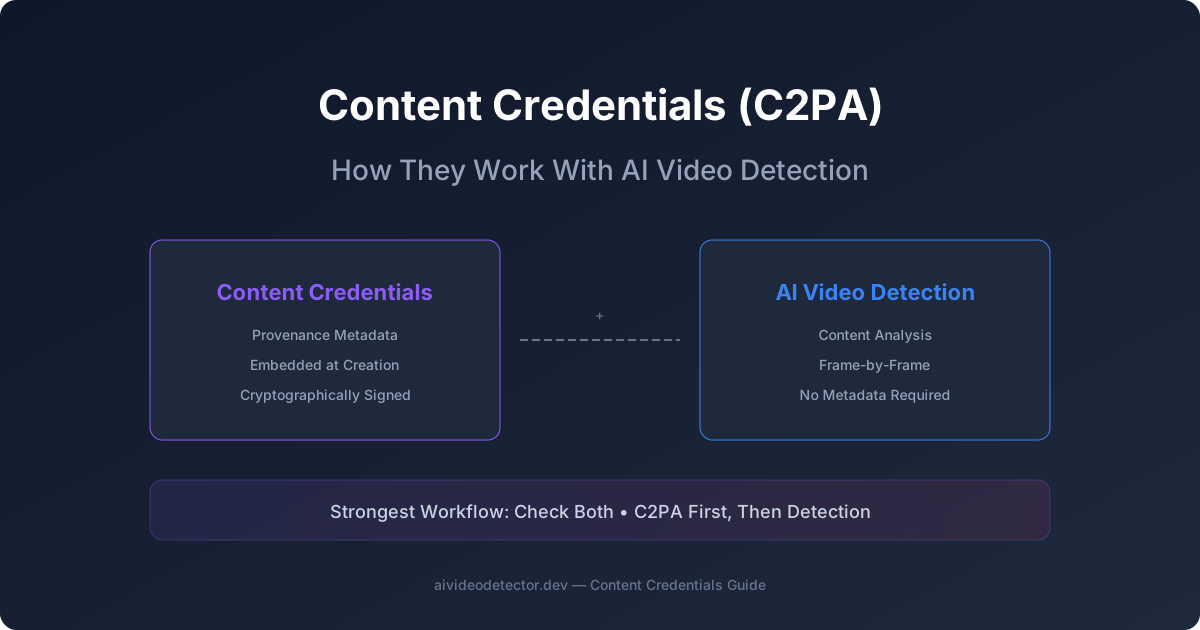
Content Credentials and AI video detection solve different parts of the same problem: is this video trustworthy? Content Credentials embed provenance metadata at creation time. AI video detection analyzes the video content after the fact. Neither replaces the other — and understanding the difference matters for anyone verifying online video.
What Are Content Credentials (C2PA)?
Content Credentials are a technical standard developed by the Coalition for Content Provenance and Authenticity (C2PA). When a camera, editing tool, or generative AI platform supports C2PA, it attaches a tamper-evident metadata record to the file. This record can include the device that captured the video, the software that edited it, the date and time, and whether AI tools were involved in creation or modification. The metadata is cryptographically signed — if someone strips or alters it, the signature breaks. Major adopters include Adobe, Google, Microsoft, Meta, Sony, and OpenAI. Google's Pixel phones now embed Content Credentials in their native camera apps.
How AI Video Detection Is Different
AI video detection does not rely on metadata. It analyzes the video content itself — frame-by-frame — looking for signals of synthetic generation: temporal inconsistencies, facial anomalies, motion artifacts, and pixel-level patterns. AI Video Detector, for example, works on any video regardless of how it was created or what metadata it carries. You paste a URL or upload a file, and the tool returns a verdict, confidence score, evidence frames, and reason codes. This makes detection the right tool when Content Credentials are missing, stripped, or never existed in the first place.
Where They Complement Each Other
The two approaches cover each other's blind spots. Content Credentials prove provenance when the metadata is intact — but metadata gets stripped during uploads, screenshots, and platform transcoding. A video reposted on social media may lose its C2PA record entirely. AI video detection fills that gap: it can analyze the pixels regardless of metadata. On the other hand, if a video has valid Content Credentials showing it was captured on a known camera with no AI edits, you may not need to run a detection scan at all. The strongest verification workflow checks both: Content Credentials first (when available), then AI video detection when the credentials are absent or the content still looks suspicious.
Current Limitations of Content Credentials
Not all videos have Content Credentials. The standard only works if the capture device, editing software, and publishing platform all support C2PA — and most consumer tools do not yet. A video recorded on an older phone, edited in a non-C2PA editor, or downloaded from a platform that strips metadata will have no provenance record. Metadata can also be stripped intentionally by someone who wants to hide the origin. And Content Credentials do not judge whether the content is 'true' — they only record the chain of custody. A deepfake created with a C2PA-compatible tool would have valid credentials showing it was AI-generated, but a deepfake created with non-compliant tools would have no credentials at all. For a detailed side-by-side breakdown, see Detection vs Content Credentials.
When to Use Which
Start with Content Credentials when available — a valid C2PA record with a trusted signer is strong provenance evidence. When credentials are missing, stripped, or the source is unknown, use AI video detection to analyze the content itself. When the video involves high-stakes claims — financial fraud, political statements, legal evidence — use both. AI Video Detector works on any video, with or without metadata. For current plan details, see pricing.
Sources
How This Article Was Created
This article was written by the AI Video Detector product team. C2PA standard details were sourced from the C2PA specification and Adobe Content Authenticity Initiative documentation.