Deepfake Examples: Real Fakes in 2026
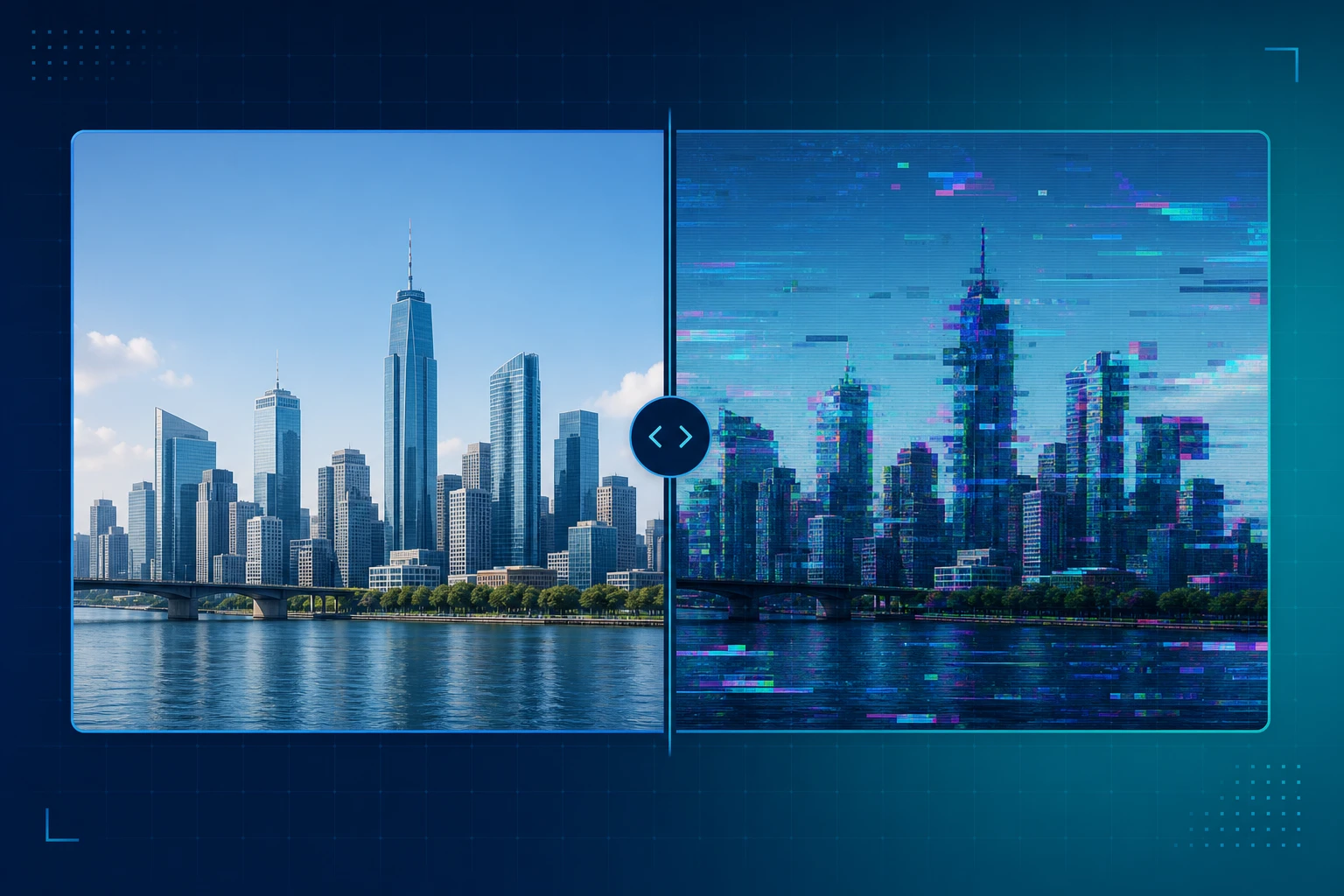
Three years ago, deepfakes had obvious tells — waxy skin, frozen backgrounds, uncanny valley faces. In 2026, most people can't spot a fake on first watch. Here are the real categories of deepfakes you'll encounter and what still gives them away.
Face Swap Deepfakes
Face swaps put one person's face onto another person's body. The technique is mature — open-source face-swap tools have made basic synthetic-video creation much faster and more accessible than before. The weak points haven't changed much: the hairline, the ears, and the jawline. When the subject turns their head, the swapped face often stretches or loses detail. Teeth are another giveaway — they merge into a white blur during wide smiles.
Voice Clone Deepfakes
ElevenLabs and similar platforms can clone a voice from a few seconds of audio. The result sounds convincing on its own. Pair it with video, though, and the cracks show. The lips don't form consonants correctly. Pauses land in unnatural places — a cloned voice might rush through a sentence that a real speaker would deliver slowly. In its 2025 Internet Crime Report, the FBI reported over $893 million in losses from AI-facilitated fraud, including voice cloning and deepfake schemes.
AI-Generated Scene Deepfakes
Sora, Veo, and Kling generate entire scenes from a text prompt. No face swap needed — the AI builds the person, the environment, and the motion from scratch. These are the hardest to spot. Watch for physics errors: a glass that doesn't cast a shadow, a hand that passes through a table, or two people walking through each other. Repetitive background motion — like a flag waving in the exact same pattern — is another common sign.
How to Spot Deepfake Examples
Run through this checklist: Do the eyes blink at a natural rate? Does the skin texture stay consistent across frames? Does the lighting on the face match the room? Does the audio sync with lip movements? Does the motion feel natural — or too smooth, too jerky? An AI video detector like AI Video Detector automates this checklist, scoring the video and highlighting the specific frames where it found suspicious signals. Free scanners like Deepware Scanner offer quick checks, while image-focused tools like WasItAI handle still photos.
Why Examples Matter
You build pattern recognition by seeing examples. The more deepfakes you review, the faster you catch the next one. AI Video Detector provides evidence frames so you can see exactly what triggered the scan — use them to train your own eye, not just to trust the tool. For verification workflows, see How to Verify Viral News Clips and Celebrity Deepfake Detection.
Sources
How This Article Was Created
This article was written by the AI Video Detector product team based on public examples, platform takedown records, and internal testing of detection signals on synthetic footage.